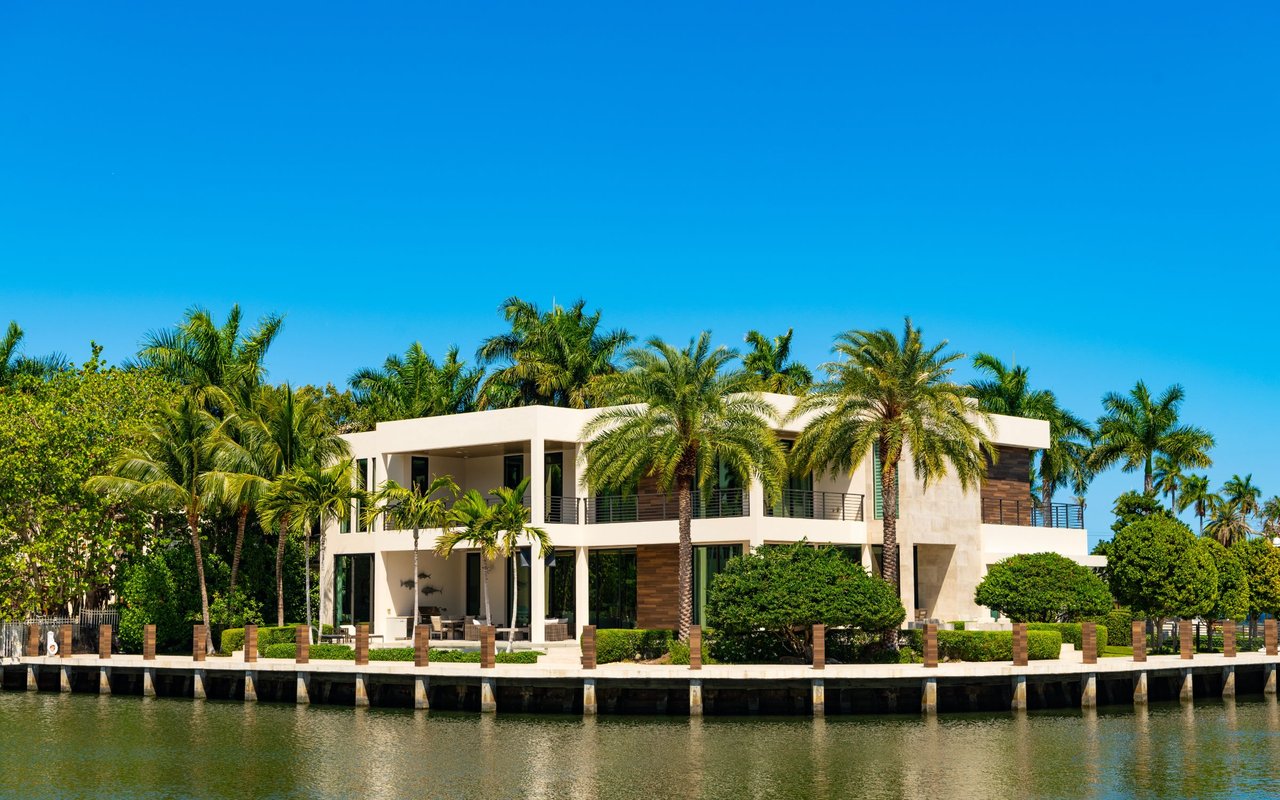
Santa Rosa Boulevard runs the length of Okaloosa Island, the developed stretch of Santa Rosa Island across the Sound from Fort Walton Beach. For most visitors it is just the road to the beach. A buyer should read it as a property line. In the blocks between the Second and Seventh Beach Freeways, the lots between the Boulevard and Santa Rosa Sound fall under one set of recorded rules, and the lots between the Boulevard and the Gulf fall under another. One of those rules settles whether a single-family home can be rented to vacationers.
The rule is older than Florida's vacation-rental law. It still applies after a leasehold is converted to fee simple title, and Okaloosa County's own guidance treats it as one of the few places where the County can still prohibit short-term rentals. A buyer comparing the island with Destin, Navarre or 30A on rental income needs the block and lot of a listing before its price.
The Covenant That Outlived the Island Authority
The Okaloosa Island Protective Covenants and Restrictions are recorded in Official Records Book 121, pages 233 through 250. They were written for the Okaloosa Island Authority, which acted for Okaloosa County as owner of the land. The Okaloosa Island Leaseholders Association, known as OILA, dates the Authority's adoption of the covenants to November 21, 1955.
In 1975 the Legislature abolished the Authority under Chapter 75-456 and handed its assets to the Board of County Commissioners. The recorded text says this was done "with the full force of direction to be retained" in the covenants then in effect. OILA's island history adds that the same legislation kept every valid existing restrictive covenant in force until the County Commissioners amend it in the manner the law provides.
The covenant that matters most to investors is in Part C, which governs Zone B-1, the Private Residential Areas. There, a building may serve as "a detached, vacation or permanent residence for only one family or for one housekeeping unit which shall not be operated as a group or rented to transients." The clause names vacation use outright. An owner may use the house as their own vacation home. What the clause rules out is renting it to transients.
The Boulevard Line, Block by Block
The covenants map the zones by block, Beach Freeway and lot number. In Blocks 4 through 9 the split follows Santa Rosa Boulevard.
| Block | Boulevard to Santa Rosa Sound | Boulevard to Leaseholders' Beach on the Gulf |
|---|---|---|
| 4, Second to Third Beach Freeway | Zone B-1, Lots 128 to 181 | Zone B-2, Lots 182 to 209 |
| 5, Third to Fourth Beach Freeway | Zone B-1, Lots 210 to 254 | Zone B-2, Lots 255 to 282 |
| 6, Fourth to Fifth Beach Freeway | Zone B-1, Lots 284 to 337 | Zone B-2, Lots 339 to 366 |
| 7, Fifth to Sixth Beach Freeway | Zone B-1, Lots 367 to 421-A | Zone B-2, Lots 422 to 449 |
| 8, Sixth Beach Freeway eastward | Zone B-1, Lots 450 to 505 | Zone B-2, Lots 506 to 514 and 516 to 538 |
| 9, 7th Beach Park to Air Force property | Zone B-1, Lots 539 to 546 | Zone B-2, Lots 547 to 604 |
The covenants label Zone B-2 the Apartment, Hotel Court and Hotel Areas.
The Boulevard does not work as a shortcut everywhere on the island. Block 3, between the First and Second Beach Freeways, is zoned B-2 all the way from the Gulf to Santa Rosa Sound. "Sound side" and "single-family" usually line up, but the lot number decides the zone, not the view out the window.
Why Florida's Preemption Stops Short of Zone B-1
Florida generally keeps counties from banning vacation rentals. The County's short-term rental one-pager says so plainly, citing section 509.032(7) of the Florida Statutes: the County "cannot prohibit STRs or regulate the duration or frequency of STRs." The same page lists what the County may regulate, including occupancy limits, registration, on-site postings, inspections, parking, solid waste and evacuations.
Then it names its exception. The County writes that the B-1 restriction "predates the 2011 legislative preemption and therefore, is grandfathered and exempt from the statutory requirements," and it ends with this:
"The County has no authority to prohibit STRs except within certain areas of Okaloosa Island."
The County's Short Term Rental Information page carries the same point into its checklist for owners. Next to state vacation-rental licensing and the Okaloosa County Tourist Development Tax, it points owners to the Zone B-1 covenants. It also asks anyone who is "unsure if you're in a restricted area of Okaloosa Island" to call Growth Management at 850-651-7180. The covenants themselves allow Okaloosa County or an island lessee to seek damages or equitable relief over a violation.
The protection that a buyer elsewhere in Okaloosa County can lean on, a state law keeping local government out of rental decisions, does not reach these lots. Two homes a few hundred feet apart in the same block can face different answers to the same rental question.
Fee Simple Title Carries the Covenants With It
Okaloosa Island was not originally sold. OILA explains that the land was leased from the Okaloosa Island Authority for 99 years, with an automatic 99-year renewal. The recorded covenants say a 1992 County policy allowed those leases to be exchanged for title. OILA's history dates the Commissioners' approval of fee simple conversion to 1995.
The recorded text says leases could be exchanged for titles "with full force of these PROTECTIVE COVENANTS AND RESTRICTIONS retained." It also redefines its own vocabulary, so that "leasehold" means "leasehold/title" and "leaseholder" means "leaseholder/owner." A Zone B-1 lot that has been converted to fee simple remains a Zone B-1 lot under the same use rules.
Conversion has value for its own reasons. On its conversion page, OILA says most lending institutions do not want to lend on leased property and that this can make financing difficult with a non-local mortgage company. The County conversion application posted by OILA asks for a copy of the current lease assignment, a Tax Collector certification that taxes and assessments have been paid for the past five years, and a title company report showing the applicants hold 100 percent of the leasehold interest. It also charges a non-refundable $500 fee payable to Okaloosa County. That fee does not cover the title search, the ownership report or the tax certification. Each parcel needs its own application, every leaseholder named in the current lease assignment must sign, and applications are not accepted when the original lease has no option for further renewals. The County's quitclaim deed comes with no warranty of title and no representation about its condition.
That gives an island buyer two questions to ask about every parcel. Is the land held by lease or in fee simple? Which zone is the lot in? The answer to one says nothing about the other.
Who Reviews a Fence on the Sound Side
The covenants also govern how a Zone B-1 house can change over time. Part C says "it is desired that no building in this area exceed two (2) occupied stories in height" and sets a 30-foot street front setback. Lots cannot be subdivided or combined without special County approval.
Every building, fence, wall, walk, driveway, pier, dock or seawall, and every alteration to one, needs plans reviewed by OILA's Architectural Committee and written approval from Okaloosa County before work begins.
The association that advises the County on these reviews has made its position on rentals public. OILA's Protect Your Property page lists "Short-term rentals in the quiet single-family home zones north of Santa Rosa Blvd." among the threats it watches for. A buyer who plans to renovate a sound-side house with rental income in mind will be dealing with neighbors who say openly that they oppose that use.
Reading September's Numbers Against the Island
The latest public figures cover the whole region. In Florida Realtors' September 2026 metro report, released October 16, the Crestview–Fort Walton Beach–Destin metro, covering Okaloosa and Walton counties, recorded 550 single-family closings. The median sale price was $454,325, up 7.0 percent from September 2025. Condos and townhouses went the other way. There were 117 closings, and the median of $500,000 was down 17.4 percent year over year.
These numbers do not describe Okaloosa Island alone, and they cannot price a specific island lot. What they show is that, across the two counties, single-family homes and condos were not moving together in September 2026. On the island that gap has a second layer. The single-family houses on the sound side of Blocks 4 through 9 sit under a no-transient-rental covenant. The Gulf-side lots in the same blocks are zoned for apartments, hotel courts and hotels. A buyer comparing the two is choosing between property types that are priced in different regional markets and governed by different recorded rules.
Before an Offer on Okaloosa Island
- Find the block and lot. Match the parcel to the zone listings in the recorded covenants instead of relying on which side of the Boulevard it seems to be on.
- Confirm the zone with the County. Okaloosa County's Growth Management office keeps the Zone B-1 map and takes calls at 850-651-7180.
- Establish how the land is held. Find out whether the parcel is still leasehold or has received a County quitclaim deed, and have an independent title examination done either way.
- Ask a lender early if the land is leased. OILA's financing warning is aimed at out-of-area mortgage companies.
- Budget for review. Plans for any addition, dock, fence or seawall go to the Architectural Committee before the County approves them in writing.
- If rental income is part of the plan, know that the state and County rules are separate from the covenant. Florida DBPR requires a vacation-rental license when an entire unit is rented more than three times in a calendar year for stays shorter than 30 days or one calendar month, or is advertised as regularly rented to guests. Renting individual rooms does not need a DBPR license. The County tourist development tax is broader and applies to rentals of six months or less. Neither one settles the covenant question.
This is general information about public records and County guidance, not legal, tax or financial advice. Please confirm how any rule applies to a specific parcel with a Florida real estate attorney, a title professional or your lender.
FAQ
Does converting an Okaloosa Island lease to fee simple remove the rental restriction? No. The recorded covenants state that leases exchanged for title keep the covenants "with full force," and they define "leaseholder" to include owners.
Can Okaloosa County restrict vacation rentals anywhere else? The County's one-pager says it has no authority to prohibit short-term rentals "except within certain areas of Okaloosa Island."
Can an owner use a Zone B-1 house as their own vacation home? The B-1 use clause allows "a detached, vacation or permanent residence for only one family." What it restricts is renting the house to transients.
If you are weighing an Okaloosa Island property, Crystal Watkins can match its block and lot to the covenant zones and confirm how the land is held before you write an offer. Let's Connect.